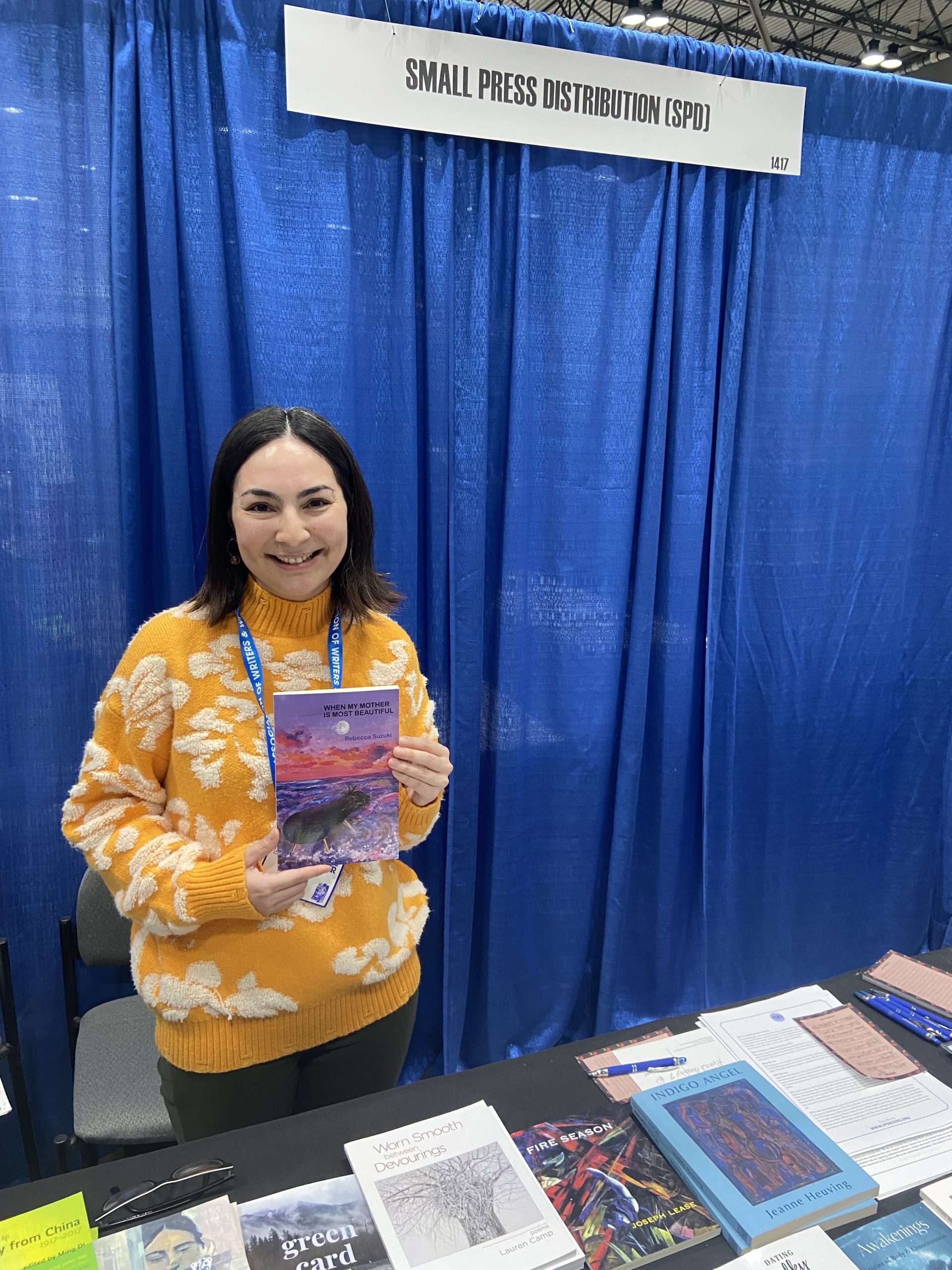
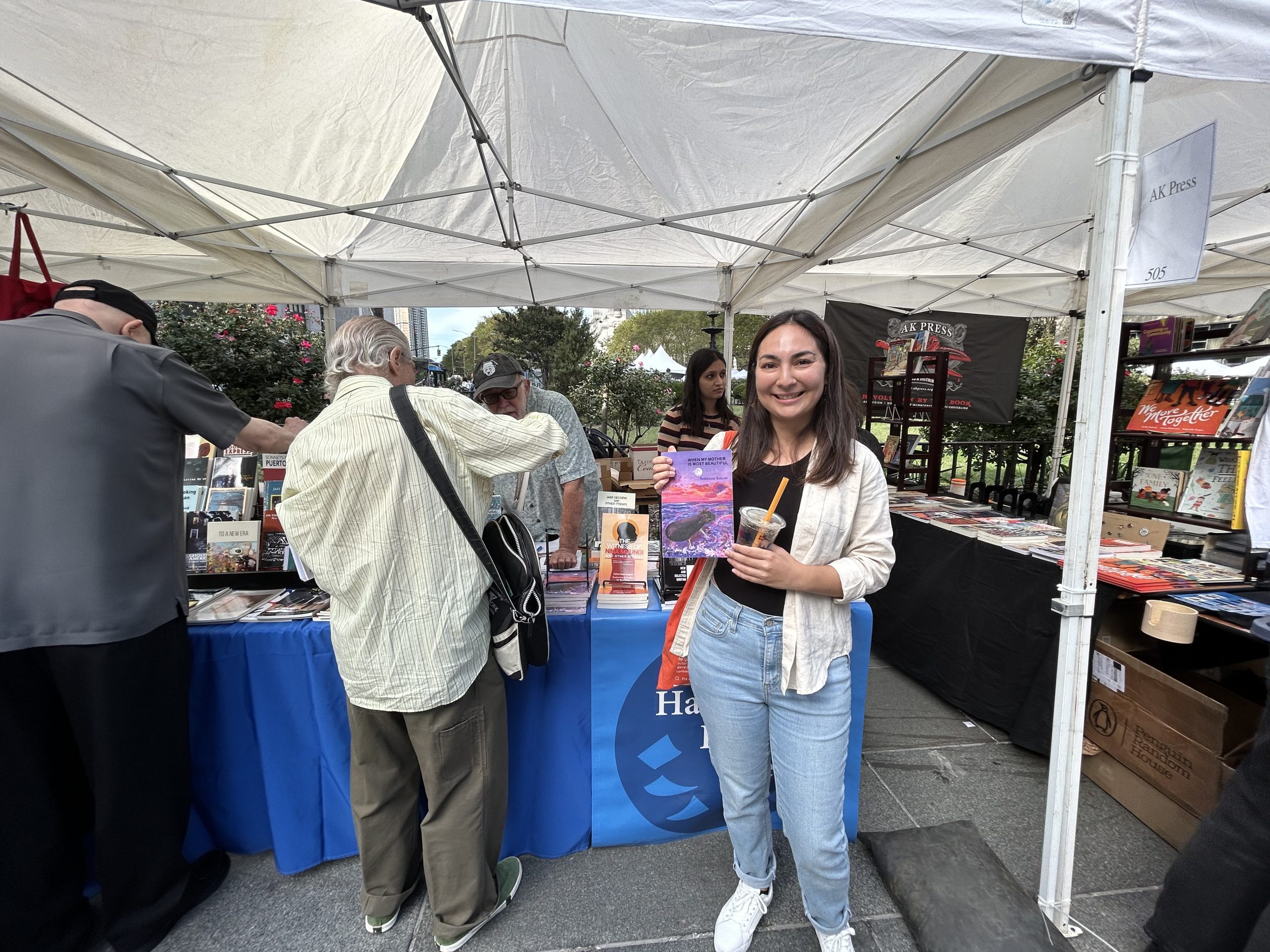
Rebecca Suzuki is the author of When My Mother Is Most Beautiful, winner of the Loose Translation Prize and published by Hanging Loose Press in December 2023. She writes creative nonfiction in a mixture of forms and languages, and her work has been published in River Teeth, Identity Theory, KGB Bar Lit, and more. Rebecca is also a translator from Japanese to English and a faculty lecturer of English at Queens College, CUNY.
Hanging Loose Press: What are this past year’s accomplishments that you are most proud of?
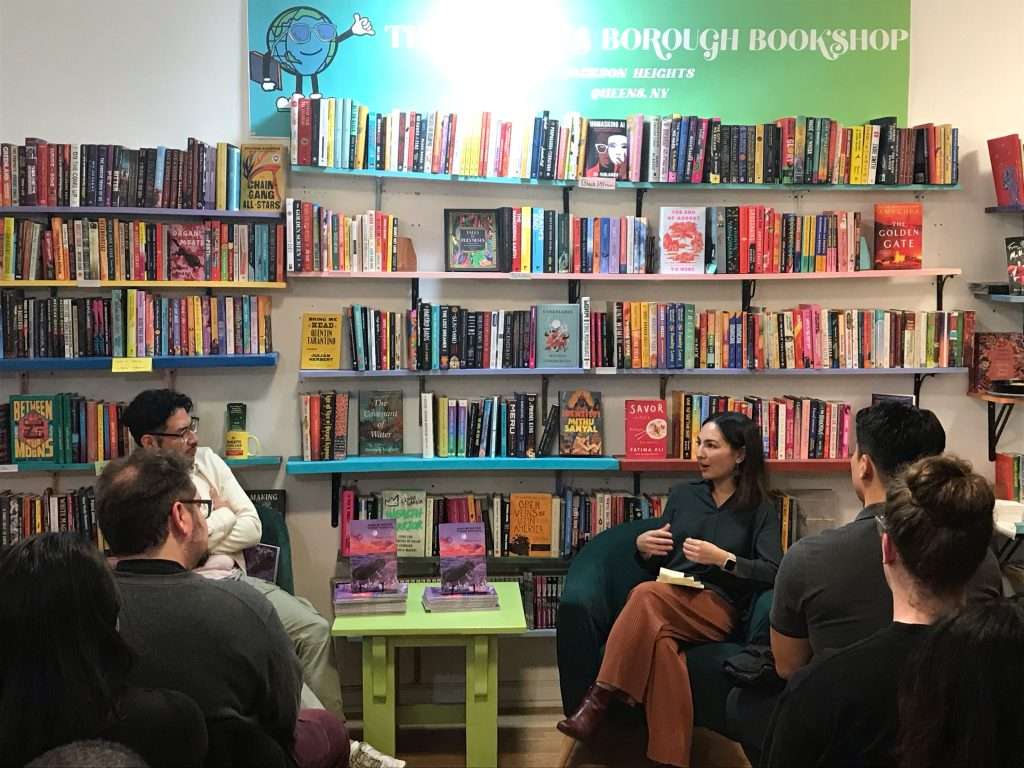
Rebecca Suzuki: Because When My Mother Is Most Beautiful was published in the last month of 2023, I continued the celebration well into 2024. I had an amazing book launch at the World’s Borough Bookshop in Jackson Heights, followed by a wonderful talk at Queens College. I had friends from so many places reach out to share their favorite entry, or how they felt about my writing, or where they found pieces of themselves in my book, and I cherished each and every one of these sweet, sweet exchanges. Aside from my book being published, I got to be on a panel at AWP with my favorite colleagues at Queens College and participate in an off-site reading with incredible poets—it all felt like a dream! In the summer, I participated in my very first writer’s residency at Firefly Farms which was life changing, and in the fall, I began my second academic year as full-time faculty at Queens College. I feel incredibly lucky for all of these opportunities. But really, what I’m most proud of, or what I view as my biggest accomplishment from this past year is that I stayed true to myself. I remained grounded, and I continued to dig and learn about my true self. For years I’ve struggled with imposter syndrome and insecurity stemming from many, many things… But I am so proud of myself for staying committed to unlearning toxic thought patterns and trusting myself. I think this is really the reason I was able to accomplish all of the other things.
HLP: Your book is absolutely beautiful and we are happy to be a part of ushering it into the world. Certainly the phenomenon of the “imposter syndrome” is so diabolical, and your ability to put it in perspective is a feat. Can you talk a little bit more about how you worked through it?
RS: Thank you! I am truly grateful to Hanging Loose for believing in my work. The opportunity to have my writing reach a bigger audience has been a huge factor in working through my imposter syndrome. I was raised to hide things from people. Especially deeply personal or painful things, because my mother always told me, “Don’t let others feel sorry for us.” In some ways, this made us strong and resilient, but in other ways, I think it closed a lot of doors. In Japanese culture, there is this sense that talking about personal things is reserved for those very close to your life. It’s socially inappropriate to burden someone with your personal issues. So, my mother hid huge things from people, like the fact that she was a widow. I’d even hear her talking to someone about my father as though he were still alive sometimes. She never invited people to our basement apartment. Unfortunately for me, this created a deep sense of shame about my background and about where I came from. So, I hid everything, just like I was taught to. I just focused on blending in and trying to belong. But I realized this way of living was unsustainable for me. There was no way to deepen any sort of relationship with people with so much hidden away, and I felt that shame creep up whenever someone tried to connect with me beyond the face I put on. I found myself pretty unhappy, and my writing was crappy. But a dear friend of mine from the MFA program encouraged me to take a creative nonfiction workshop with her, and that’s when I decided it was time to essentially say F-it and share my story, including all the shameful parts of myself and my past. And it was like the floodgates opened! Don’t get me wrong, I felt so nervous when I first shared some of that writing with the class. I thought all that shame would come back and I’d have to go hide in a hole. But what happened instead blew my mind. My writing was received really well. And what’s better, my readers asked for more. They encouraged me to keep going, to keep writing, and so I did. And eventually, that became my book. And when it became a book, I opened up even more, because I found myself standing even after everyone knew these shameful things about me. I didn’t become a social outcast like I thought I would. And now, I’m at a point where I don’t feel the need to hide anything. I can be my authentic self, and a funny thing started happening. The things that made me feel ashamed in the past started making me feel proud. So, I have to thank writing for being the tool to help me out of my imposter syndrome, but even more so, readers for welcoming me with open arms. Nothing is more valuable to me than someone who truly listens—without judgment. All this to say, it’s impossible to get over imposter syndrome alone, in your own mind. Something external needs to happen—a connection with people and the world. And for me, writing was the way to do that.
HLP: Any other particularly difficult experiences or challenges for you this past year? And how did you work through them?
RS: Ohhh yes. Where do I begin, hah. I think that being a published poet and a college professor come with certain responsibilities. Huge ones. To me, the biggest one is speaking the truth. And 2024 was a year when truth was both rearing its vile, ugly face and at the same time carrying us to a new, transcendent place. This was the year when I learned what it really meant to not just seek out the truth, but to speak it. I literally lost family members over this. I watched students and faculty get punished, harassed, and bullied over this. Sometimes, it felt like I was living in some alternate reality, and I had no idea how to stay strong, to be a figure that could empower instead of just cower in fear. I didn’t want to fail or disappoint my students, my colleagues, my friends. I had countless internal battles and sleepless nights. But what got me through it all was having like-minded people around me. Wonderful friends that I could count on. People in my community who were willing to fight the fight with me, and pulled me up when I had doubts. And this is something I am definitely prioritizing in 2025. Community and supporting each other is more important than ever before. And of course, to continue speaking the truth.

HLP: Speaking truth is tough, but even tougher when it is rebuked. The value of being surrounded by kindred spirits can never be disregarded. Can you talk more about how you’ve built your community for readers who might be going through similar struggles?
RS: Thank you for this question, because I think it’s really valuable to reflect on this. I like to think, “Oh, I was just lucky!” or “it just happened naturally!” but I don’t think this is true. I think I actually put a ton of effort into this. I prioritized this. For those who are looking to build community: I think first, you need to put yourself in spaces where you will run into like-minded people, even if the idea scares you. My first step was applying to the MFA program. My imposter syndrome REALLY tried to hold me back on this, but I pushed back on my fears and just went for it. So, for those who are sitting on their applications for grad school or hesitating to sign up for a workshop or a class, this is your sign to just go for it! I remember feeling so out of place and nervous during orientation—I just thought everyone was way ahead of me and they were like, too cool for me. But I held my ground and just convinced myself that I also belonged there. Anyway, that’s step one: put yourself in that space. But that’s not enough. You have to then initiate and be proactive. Some of this feels deeply uncomfortable at first, because as a society we don’t value connections and fostering friendships. But I remember for example on the last day of class one semester I asked my classmates if anyone was interested in continuing workshops informally on our own. I was nervous to ask, because you always imagine the worst case scenario. I was afraid everyone would find my idea ridiculous and brush me off. But that’s not what happened at all. Many said yes to my invitation. The thing is, most of us are craving connection and community, so chances are, when you initiate it, so many people will say yes! So, that’s step two: take initiative and be proactive. Once you’ve got two, three people in your circle, you can find common interests and discuss how you’d like to expand your group. Most of the people in my community are connected by our mutual love for writing and reading, but we also all want to do the work of resisting in whatever way we can to the draconian policies that the Trump administration is imposing. Having a common goal like this keeps us energized and close. So, step three is to find common interests and to expand; step four is to find a common goal to keep the community tight. And the last thing is that when you gather with your community, go with the mindset of wanting to give something to your community members. I think many of us mistakenly ask, “What am I going to get out of this?” or “How does this benefit me?” but I feel much, much happier when I reverse this and ask, “What can I give to my community members?” and “How can I be of help to others?” The work of decentering oneself is essential to being in a healthy, happy community.
HLP: What are three books you’ve read recently that have made an impression on you?
1. Hala Alyan’s The Moon That Turns You Back – Alyan’s poetry just cuts straight through you and grabs your heart. Refuses to let go. I have to take a breath between each poem because they are just so powerful.
2. Crazy Brave: A Memoir by Joy Harjo – I think my favorite genre is memoirs written by poets. Harjo’s life is completely different from my own. And yet I find so many connections. Particularly the stories about her before she was born, the stories of her ancestors, the discomfort of her body and mind having to exist in this shallow, hyper-capitalistic, white supremacist world.
3. The Serviceberry by Robin Wall Kimmerer – Recently I’ve gotten into audiobooks, and this one is great because it’s read by the author, an incredible indigenous scientist. She challenges scarcity mindset, which is at the heart of capitalism. In our existing world, competition and hoarding resources is seen as necessary or the norm. But often the natural world teaches us something different: that there is abundance, reciprocity, interconnectedness, and gratitude. The ideas in her book weren’t so far from the teachings I grew up with in Japan—as a young child I was taught to put my hands together and say Itadakimasu before every meal so that I could think about the earth that produced this food, the animals that had to be sacrificed, the people who spent time making it. And to say gochisousama only after I’d cleaned the plate, to show my gratitude. In so many ways we are all straying away from such practices, but we desperately need to return to them if we want any future at all.
HLP: I am reading Kimmerer’s Braiding Sweetgrass and feel very grateful to have been gifted this book. As you note, we must get back to gratitude as daily practice and move towards the idea of participation over competition.
RS: Ah, I’m so glad you’re reading Kimmerer too! And totally. Mother Earth gifts us things every single day, and we’ve stopped ritualizing our gratitude for her. This is why she is sick, and why so many of us feel unfulfilled. Everyone should read Kimmerer’s books and learn from her how to shift our thinking and bring that practice back.
HLP: Any upcoming projects?
RS: I’m doing some literary translation at the moment, which feels great! I am translating some Zuihitsu from Japanese to English for a big project (stay tuned!). Zuihitsu is a really fascinating form. It reads like stream-of-consciousness in its intimacy and vulnerability, but it’s still very carefully thought-out and so gorgeous. Many of them read like prose poems. After going through a big batch of Zuihitsu in Japanese, I found that they were starting to influence my own writing, which brings me to the other project I’m currently working on: a full-length memoir. Crossing my fingers that I’ve finally figured out my way in!!


 From loose pages to issue 119 of our magazine, an anthology of over 100 HLP poets, over a decade of the Loose Award for translated works, the Founders prize for first book in its third year, and a bunch of great books in the works, we couldn’t have come this far without you.