
Joel Lewis was born in Brooklyn and grew up atop the Hudson Palisades of Northern New jersey. He attended college outside of Paterson, NJ, which led to his discovery of William Carlos Williams and which further led to discovery of WCW’s somewhat unruly poetic son, Charles Olson. He took crucial workshops at The Poetry Project with Alice Notley, Ted Berrigan and Maureen Owen. He was a teaching assistant to the Geordie poet Tom Pickard during a spring sojourn at Naropa. He received a Creative Writing degree at CCNY, where he took workshops and talked about jazz with William Matthews. He edited AHNOI magazine and its low-rent publishing wing, Gaede’s Pond Press. He won the second (and last) Ted Berrigan Memorial Award which resulted in his first book House Rent Boogie (Yellow Press). Six further volumes of poetry ensued, three of which have been with Hanging Loose Press. He edited Bluestones and Salt Hay (Rutgers University Press) , an anthology of contemporary New Jersey poetry, On the Level Everyday, the selected talks of Ted Berrigan (Talisman) and Reality Prime, the selected poems of Walter Lowenfels (Talisman). He has written a pile of prose, topics ranging from White Castle hamburgers, visiting the Whiffle Ball Factory to interviewing the composer Moondog and managing to get paid for it. He is a poetry advocate, organizing numerous readings around Northern Jersey as well as initiating the very short-lived NJ Poet Laureate (even finding himself being quizzed by skeptical state assemblymen in session), which resulted in becoming such a headache for Amiri Baraka. He lives in Hoboken with his wife Sandy Flitterman-Lewis, a noted film scholar who was one of the founding editors of Camera Obscura and is a leading scholar of filmmaker Agnes Varda.
Hanging Loose Press: What are this past year’s accomplishments that you are most proud of?
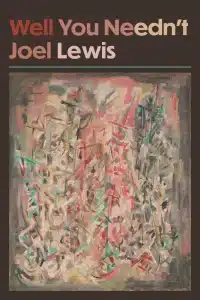
Joel Lewis: Last year was my first full year of retirement, after many years as a social worker, then as a victim advocate in the NYC court system, so now I can turn more of my energies towards writing and general mental self-employment. With my wife reaching the finishing line in a 40-year academic career, we can travel and just plain futz about without coordinating our work lives. So out of this situational change was my new book, Well You Needn’t, whose putting together was much more involved than my earlier 6 books (in a good way). I owe a lot to my editor Dick Lourie (& other members of the HLP apparatus) for getting me to the finish line.
HLP: Congrats on the retirement, and your many years of service of advocacy. We are gaga over your new book, and I am just a cream puff over your poem “John Lee Hooker & The American Economy.” Can you talk a little bit about the process of gleaning so much history and intimacy into these poems?
JL: Well, John Lee Hooker has been a long-time hero. My first book’s title “House Rent Boogie” is from my favorite song of his. Working at Jazz Etc. (as described in the memoir section), I was able to order LPs of his earliest recordings, mostly Hooker playing soloing, recorded for a black listenership, unlike his contemporary records I was listening to, aimed for the white rock audience. I read as much as I could about my jazz blues and blues hero and as a kid there was not that much around. I found the material for this poem in a book by Charles Gilette, a British musicologist who also promoted World Music as well playing early demos of Elvis Costello and Ian Drury on his BBC radio show. Hooker’s description of his recording history (a nightmare for his discographers) and the statement “So, I just used/my different names.” represented to me how he survived in a marketplace that exploited black musicians. The intimacy is in letting the musician have his say. In the case of Phil Woods, perhaps the ultimate Charlie Parker acolyte – after all, he married Bird’s widow and helped raise his children – his own words provides for an up-close first-hand account of Parker as a man and a musician. My inspiration for this technique of sourcing material comes from Walter Lowenfels, especially his volume American Voices, who felt it was a political act to house the voices of everyday folk into his poetry. I’m also influenced by Jonathan Williams, especially his Blues & Roots/Rue & Bluets: A Garland for the Southern Appalachians., who kept his ear to the ground and captured the language and folkways that surrounded him.

HLP: Any particularly difficult experiences/challenges for you this past year? And how did you work through them?
JL: The political bad weather caused by the ‘24 election takes up a lot of my mental space and, like many of us, there is a question of how to respond. Self-care, at this point is important, which maybe means less MSNBC and news feeds in general. The rise and normalization of Anti-Semitism is unsettling to me as well as most of my Jewish cohort. As a child of an Auschwitz survivor, I’m relieved that my father and the Holocaust survivors who were part of the community I grew up in are not alive to see a U.S. president have dinner with a known neo-Nazi, as well as the defacing of Jewish spaces in this country (my synagogue in Hoboken for example), reminiscent of Nazi Germany. In response to this situation, I have been working as an advisor to a print-only samizdat-type publication of Jewish prose and poetry called Nu Review, edited by Jordan Davis.
HLP: This climate of cruelty, fear, and mammon we’re entering into will call upon all of us to resist and respond. We are lucky as artists and poets to be able to push back with inspiration and as much conviction against injustice as possible. The samizdat sounds exactly like what we need in these times.
JL: I’m very concerned that a lot of my friends and colleagues are really losing their shit under our present political conditions. This is not good as it leads to personal paralysis and defeatism. A fellow NJ friend called me in a state of distress because of watching too much MSNBC. I convinced to her come over to Hoboken as there was two shows opening at the l Hoboken Historical Museum. The museum was packed, both shows were great, she met a lot of interesting people and her spirits were lifted enough so that when she went back home, she began working on her art. There was nothing obviously political about either shows – it was more about the energy of the audience, who were mostly local folks and that we were in a creative space. I don’t think Anti-Trump poetry readings or Anti-Trump magazine issues will do much, but I think more creative events and even just getting a bunch of people meeting up at a museum then having coffee afterwards would help connect people with each other. Young writers should mingle with older writers (and vice versa) –something I don’t see much now but something that was common when I was younger. As culture workers, we need to be ready to mobilize, as I wouldn’t be shocked that there will be an attempt to dissolve the NEA/NEH and the Corporation for Public Broadcasting – the moderate Republicans that had saved funding in the past are no longer there in Congress. Politically, it might be good to think again of creating a Popular Front-type movement whose singular purpose is getting MAGA out of governance.
HLP: Yes, making connection is key! What are three books you’ve read recently that have made an impression on you?
JL: I tend to drift between books (a habit acquired through using a Kindle (which is easier for me to read). I’m currently reading The Notebooks of Sonny Rollins (NYRB) which is a rare view into the thought and process of an American jazz master – analytic, funny, profound and spiritual. I interviewed Rollins twice for program notes at Newark’s NJPAC and recognize his voice in his pages. I have been a long-time admirer of earth works artist Robert Smithson and found Elizabeth Boettiger’s bio The Passion of Robert Smithson (Univ of Minn) revelatory as it includes much about his northern NJ upbringing and his earliest exhibited art that was deeply influenced by his conversion to Catholicism.
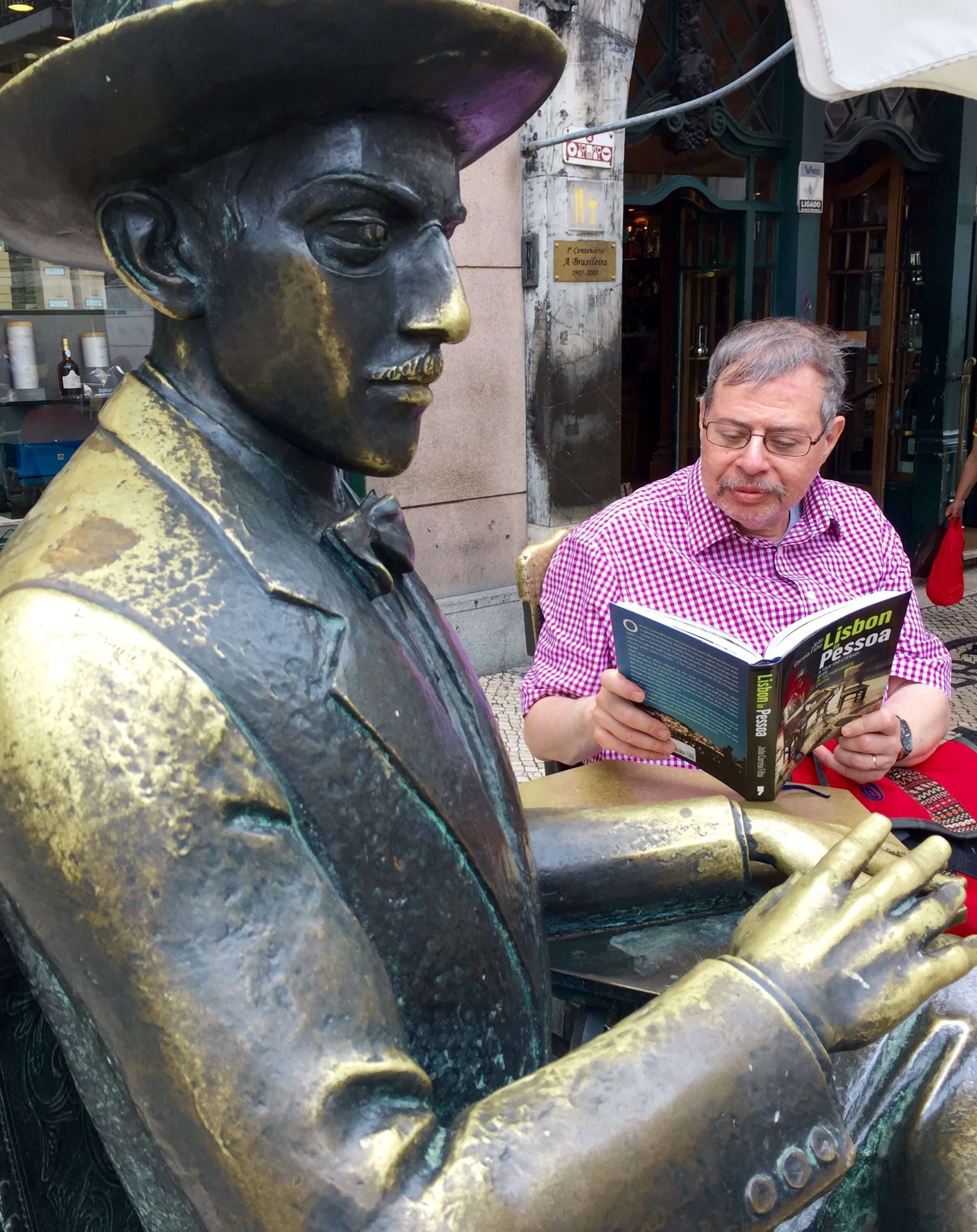
Fernando Pessoa was the poetic discovery and influence of my late middle age—my 60th birthday trip was a Pessoa pilgrimage to Lisbon. Richard Zenith, whose translation and scholarly work has done much to bring Pessoa into the Anglophone writing community, knocked it out of the ballpark with Pessoa: A Biography (Liveright). It is the most complete biography of the poet in any language and despite its doorstopper size, it flows along beautifully in witty and elegant prose.

HLP: Sonny Rollins! I saw him and Ornette Coleman in 2014 at Celebrate Brooklyn and my heart still soars from the memory of it. I enjoyed the Anahid Nersessian review of Zenith’s Pessoa in the New York Review of Books. Pessoa is such an enigmatic and fun figure. Do you think you are channeling him(s) in your own writing?
JL: Pessoa is such a big sea. I was pulled in by the Book of Disquiet, a sort of ultimate unstable text that also manages to find a healthy readership outside of academic and literary circles. It was sourced from the manuscripts kept in a wooden trunk left at Pessoa death (I saw that huge trunk at the Casa Pessoa literary center). It did not appear in print until 1982 and the first English translation was not issued until 1991. There are several editions—with varying approaches to editing the text. What’s it about? In the introduction, the heteronym author calls it a “factless autobiography.” Musings, observations, self-reflection. A great night table book. I’d suggest Richard Zenith’s translation. The Pessoa poem that pulled me into his poetry was the “The Tobacco Shop” (Tabacaria), one of the great poems in the Modernist cannon. Although Pessoa originally called the poem “The March of Defeat”, the poem is a prime example of the poet’s astute melancholy. I don’t think I channel Pessoa, but in the poem “Wouldn’t You Agree?” I am certainly thinking of Pessoa as I’m off to a DMV office to replace a drivers license that was pickpocketed in Lisbon. “The Tobacco Shop” can be found in any of the many selected volumes of Pessoa.
HLP: Any upcoming projects?
JL: I’m at the beginning stages of a Walter Lowenfels Reader. Lowenfels was an American expat in Paris who had friends ranging from Henry Miller to Samuel Beckett to Paul Eluard and who returned to the US and became a life-long member of the CPUSA. He is best known for his anthologies of global poetries, which anticipate Jerome Rothenberg’s anthologies and were published by major houses as mass market paperbacks. I edited a selected poems of his work in 1997, which is the only in-print volume of his work extant. I’m collaborating with a young scholar who did his dissertation on Lowenfels and his contact with me for information about the poet led to this project.
I would also like to assemble some of my prose writings in a book – which includes my writings about Ted Berrigan and a series of memoirs about Amiri Baraka. In the poetry department I would like to finish an Olsonic project about the Hudson Palisades which I grew up on top of and now live beneath in the city of Hoboken.
Joel Lewis and Dick Lourie will be performing their PB&J gig at Young Ethel’s on February 22nd. We hope to see you there!