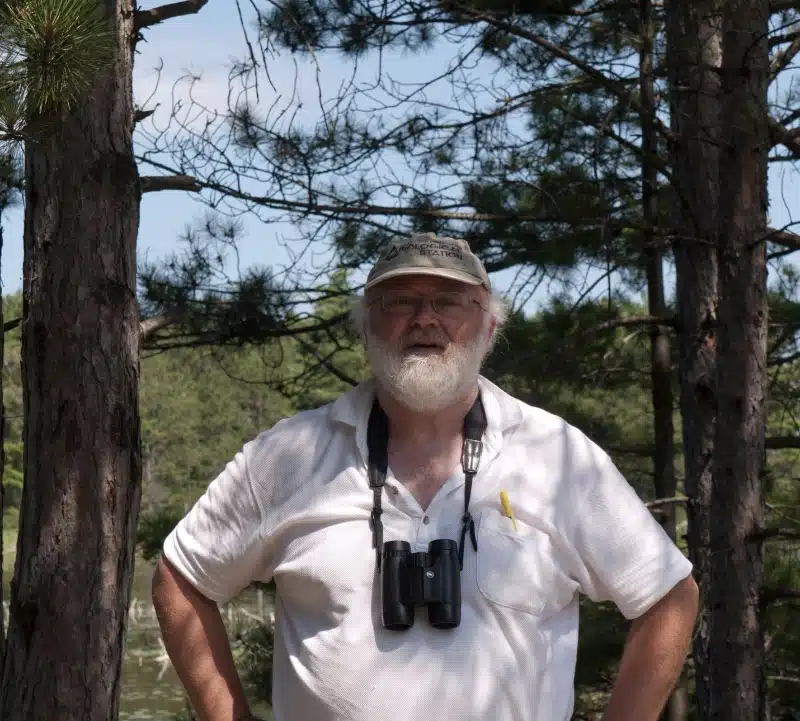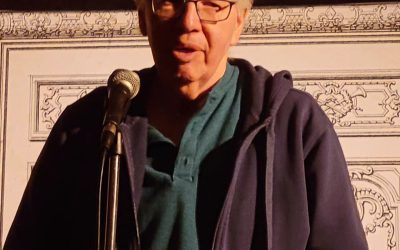

Keith Taylor is originally from Western Canada, but has lived for the past 45 years in Michigan. He has authored or edited 19 books and chapbooks. Before the very recently published All the Time You Want: Selected Poems 1977 – 2017, his last full length collection, The Bird-while (Wayne State University Press, 2017), won the Bronze medal for the Foreword/Indies Poetry Book of the Year. His poems, stories, reviews, essays and translations have appeared widely in North America and in Europe. Five years ago he retired from the University of Michigan, where he taught Creative Writing for 20 years. Before that he worked as a bookseller in Ann Arbor for another 20 years. Taylor has received fellowships from the National Endowment for the Arts and from the Michigan Council for the Arts and Cultural Affairs. He has been Writer/Artist In Residence at Isle Royale National Park (twice), the Detroit YMCA, The International Writers’ and Translators’ Centre of Rhodes, Greece, the University of Michigan Biological Station, and Greenhills School. Hanging Loose Press publshed Taylor’s Guilty at the Rapture and Life Science.
Hanging Loose Press: What are this past year’s accomplishments that you are most proud of?
Keith Taylor: I did get two book manuscripts together during this last year, did all the necessary editorial correspondence, and now am answering marketing questions. All the Time You Want: Selected Poems, 1977 – 2017 will be out from Dzanc Books in January, 2024. And What Can the Matter Be, a collection of new poems, will be out from Wayne State University Press in the Fall, 2024. (Since I’m answering you, I want to note that when I was doing that Selected, I realized that 20% to 25% of that book either appeared in early books I did with Hanging Loose Press, and/or first appeared in the journal. The first and last poems of What Can the Matter Be? also first appeared in Hanging Loose. I knew this at some level, but this was a very clear reminder of how important HL has been to me.)
Christine and I were able to scrape together the funds to spend three weeks in Amsterdam taking in the gigantic Vermeer show at the Rijksmuseum. I was ready to be impressed by the show, but I was shattered by it. Those paintings, these months later, are still entirely vivid in my imagination.
I quit teaching just before the pandemic. And then all readings and workshops stopped cold for quite a while. I did some Zoom readings and classroom “visits,” but I didn’t much enjoy them. I have just recently gone back into the world to talk poetry. I had thought I might stop doing that, but I have enjoyed it, even if I still feel a bit hesitant about it. And it is much more tiring than I remember!
HLP: It’s wonderful to know how much history you have with Hanging Loose Press. Congratulations on having two books come out in 2024! What a feat! You mention in your note to readers that the poems in All the Time You Want are in “roughly chronologically order” by date of composition, not publication, and that some have been “extensively” revised.
KT: I don’t keep good files on my revisions. My bad! But I’ve put out a request to the composer who did the piece the title poem, “All the Time You Want,” is from. He had a copy of my first version of that poem. Hopefully he’ll get back to me today. Or very soon. I’ll send it along, and then you can see. Revision almost always means cutting for me. Getting rid of things. It often takes me down to the image, away from the narrative that might have contained the image. You’ll find more narratives at the beginning of the book, although even there are examples of cutting. “Snowbound,” for instance, was once three sections, each of them longer than this one. But if I get that original, I’ll get back to you.
HLP: Can you give us some sense on the sensation of structuring two books for publication.
KT: The two books felt very different. In the Selected Poems I was watching things re-emerge. And that was startling. I didn’t know that the visual arts had been such a consistent part of my poetry. I knew that family history was there, but I hadn’t realized it carried through so strongly. I was less of a “nature poet” than I thought (although I am still proud to name myself like that).
The second book, What Can the Matter Be, due this Fall from Wayne State University Press, felt more usual. The discoveries are still there, but I was attempting to put some kind thematic arc to the whole collection. These are the poems since 2017, the closing date of the Selected (although there is some overlap in time, even though no poem is repeated), so these are the poems that grew out of the Pandemic. And it has sections. The first is called “The Extinction Report,” and as you can imagine, it is dark! The last section is called “Botanists in Love,” (a poem that first appeared in HL!) and, yes, it is trying to life to hang on to, to enjoy, to laugh with. I worry that it might be too little too late and that the book might feel too bleak. I hope not.

HLP: This is striking, learning about yourself in the process of book making. But this makes sense, I am taken with how you draw upon all of our senses to the point where we are back in time and embedded with you on your journeys, tasks and discoveries, whether it’s hitchhiking, not taking William Stafford on a bird walk, or paddling down to where hermit thrushes are calling.
KT: With the Selected and the new poems, I had almost 200 total manuscript pages. That seemed overwhelming. And then new work seemed to dry up, almost completely. Even reading slowed down. After a couple of months of not much happening, even when I sat down and tried, I decided I would go back to vivid images that remained in my brain but that I had never written about. And I worked to find words for those. And suddenly it seems as if some kind of dam has broken, and I’m getting poems out. Short, imagistic poems. Probably not everyone’s favorite, but they’ve felt like a gift. It still feels tentative, but my fingers are crossed.
HLP: Any particularly difficult experiences/challenges for you this year? And how did you work through them?
KT: This one ties into an answer in question 1: But in the pandemic I lost the habit of going out into the world and listening to poetry, of talking to the members of my community, of celebrating words with other people. I’m old enough to think that I might have lost the gumption. But it’s happening now. I’m having conversations. I’m going to readings – not as many as I once did, but it’s beginning to happen.
HLP: It’s strong, that pull to “talk poetry.”
What are three books you’ve read recently that have made an impression on you?
KT: The Trees Witness Everything, by Victoria Chang. Short poems in Japanese syllabic forms, many of them based on strong images. Wonderfully done (and a good connection to the work that is getting me back to the process of making poetry). I’m also very fond of her claimed connection to W. S. Merwin. The book is dedicated to him, and all her titles come from his titles.
Vermeer. The catalogue for the big Rijksmuseum show earlier in the year. Of course, I was ready to be moved by this, but I was completely intrigued, mostly by the details of the things he owned, and by the long and sometimes convoluted provenance of the paintings.
Sparrow by James Hynes. Historical novel that takes place in southern Spain right around the end of the Roman Empire. It takes place in a brothel, and the main character is a child sex slave. The book is very dark, but appropriately so. And the richness of the historical detail makes it unforgettable.

HLP: Any upcoming projects?
KT: I’m getting some short poems that all take place in or under the oaks in my back yard. A chapbook, perhaps? And, yes, the whole idea of it is the lingering presence of Covid! A collection of historical poems about Thomas Morton, who set up the Maypole at Merrymount. I think I would also use his words, lineated, from New English Canaan, the first satirical book written by an Englishman about North America. I would like to put out a collection of nonfiction prose, critical and/or autobiographical. We’ll see what happens with that!
HLP: Of course, allow me to put my foot in my mouth by saying you seem to have the “autobiographical” covered, but can you say more about what a prose collection would look like?
KT: As for the prose book — I first thought I would simply do an alphabetical listing of some of the poets I have written about. Over the years I have written over 500 book reviews, and most of those are on poetry. It would be easy to select from those. Also essays, and introductions (I co-edited a book on Cavafy published in Greece, and the Intro, most of which I wrote, is really interesting and got some good play in Europe). But then when I thought of other things I’ve written — the autobiographical pieces, family history, things on the process of writing, etc. — I thought they added a necessary dimension. And then there are interviews with me (two recent ones, that I’ve just been working on with Sarah Messer and Alison Swan), that might be of interest. But, really, I have no idea if a book like this would fly at all. We’ll see.

Find out more about Keith Taylor at: https://www.keithtaylorannarbor.com/