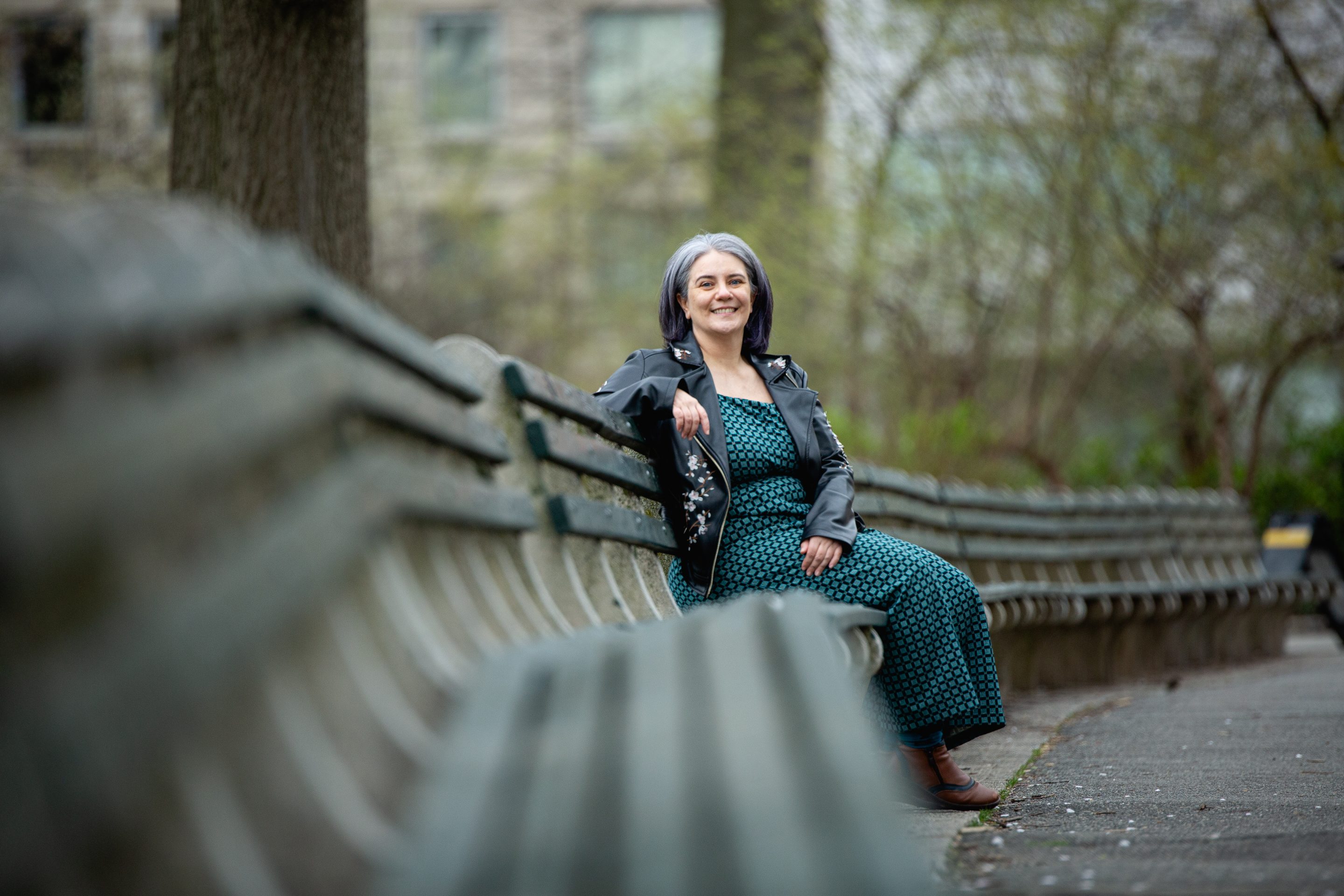

Marie Carter is a Scotland-born, New York City-based writer. She is also a tour guide, researcher, and developer with Boroughs of the Dead, a walk tour company specializing in macabre, strange, forgotten, and ghostly histories of New York City. She is the author of the books Mortimer and the Witches: A Nineteenth-Century History of Fortune Tellers, Holly’s Hurricane, and The Trapeze Diaries. She has been a guest speaker on NPR and BBC Radio Lincolnshire and written about in The New York Times, Huffington Post, and other media outlets.
Hanging Loose Press: What are this past year’s accomplishments that you are most proud of?
Marie Carter: My new book, Mortimer and the Witches: A History of Nineteenth-Century Fortune Tellers, was published by Fordham University Press in March of this year. The book is about a journalist who went by the fantastic and quirky pseudonym, Q.K. Philander Doesticks, P.B. (real name, Mortimer Thomson), who tracked down fortune tellers (who he called witches because he said they were practicing the dark arts) living mostly on the Lower East Side in the 1850s. It’s both about his peculiar biography and also an attempt to humanize the (mostly) women and examine the challenges of their times as Thomson mocked and vilified them in his writing.
The book was my pandemic baby in that the majority of research and writing took place over lockdown and, as it’s historical nonfiction it was a real challenge writing it while archives remained closed. Also, I was writing about this journalist who fell into obscurity as well as the fortune tellers who were very challenging to research. On the other hand, it made it all the more rewarding when I did eventually track down material about my characters.
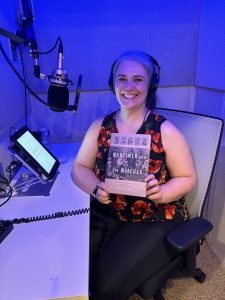
I also got a contract with Tantor Media to record the audiobook of Mortimer and the Witches, which I did a couple of weeks ago and I had such a great time recording it! The whole thing went so smoothly that I was done recording in two days instead of the anticipated three days. I think the combination of taking an audiobook recording class, tour guiding, and reading the book aloud as a way of catching mistakes during the revision process, were really helpful in making the recording an easy one.

HLP: Your research and writing in this book is thorough and balanced, and you truly bring each character and 19th-century New York to life! To you, what was the most surprising or unexpected information that you came across in your research?
MC: I was surprised by the ways in which the fortune tellers showed up in the press, especially during famous trials. As an example, Mrs. Seymour was a witness at the trial of Emma Cunningham who had been accused of murdering her lover Harvery Burdell. I had known of this trial prior to writing the book as it was a huge sensation in 1858. Burdell had been found brutally murdered in his fancy Bond Street home, strangled with fifteen stab wounds. Emma Cunningham had been consulting with Mrs. Seymour prior to Burdell’s death and had enlisted Mrs. Seymour’s husband to find out if Burdell had been visiting “houses of ill repute” and then Burdell started consulting Mrs. Seymour to find out why Cunningham had been visiting her!
HLP: Any particularly difficult experiences/challenges for you this past or current year? And how did you work through them?
MC: As an introvert, I find promoting a book is the most challenging part of being a writer. It’s very common for authors to take on a major part of the burden of promoting the book. I’ve been lucky in that so many organizations have been supportive and offered to host events for the book. Through my experience as a tour guide and a teacher, I have become adept at putting on an extroverted front for two or three hours. However, I do find myself becoming drained energetically very quickly. I’ve learned to pace myself in terms of events in that I make sure I give myself a day of working at home after an event so I can have my alone recovery time!
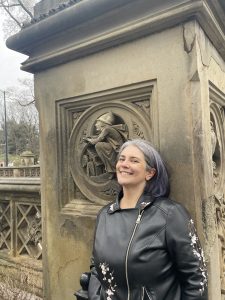
HLP: Can you say a bit more about your work as a tour guide? I would imagine that revisiting historic locations—and maybe seeing something new in them each time—while teaching others about culture and history would prompt a lot of inspiration for creative work.
MC: Mortimer and the Witches grew out of tour guiding. Initially, I had developed this as a tour with my boss Andrea Janes. It’s called “Witches of Old New York.” Customers would ask a lot of questions during the tour, some of which I didn’t yet have an answer to, and that kept me going down a research rabbit hole. Eventually I was so inspired by the topic that I wanted to write a book about it.
HLP: Speaking of books, what are three books you’ve read recently that have made an impression on you?
MC: Sex Workers, Psychics, and Numbers Runners: Black Women in New York City’s Underground Economy by LaShawn Harris
This book had a few things in common with my own book in that it examines the underground economy in which working-class, Black women operated in order to survive. It’s set in the early twentieth century and I was fascinated to see some of the parallels and differences from my research which is set fifty or so years later, but featured women doing similar work.
The Man Who Hated Women: Sex, Censorship, and Civil Liberties in the Gilded Age by Amy Sohn
The title of the book is a bit misleading in that the man she is referring to is Anthony Comstock, who crusaded against women who he considered to be practicing vices and degrading the moral fiber of the city, either through sex education or by providing various forms of birth control to women. But the book really is about the women that he hated. My favorite character to learn about was Ida Craddock who had a ghost lover! I love books that bring to the forefront characters who have been obscured from history.
There’s Always This Year: On Basketball and Ascension by Hanif Abdurraqib
I love the lyricism of Abdurraqib’s prose and he writes with such authenticity and urgency about social justice issues. The book is structured around basketball, but as someone who has zero interest in sports, I was relieved the book is also about so much more than that! I listened to the audiobook version because the author has such a compelling way of reading his work.
HLP: These all sound like incredible reads! Many nonfiction books seem to find a unique middle ground between factual reporting and engaging narrative/storytelling. While writing your book, how did you strike a balance between these somewhat opposing styles?
MC: There’s another layer of research that has to go into writing a nonfiction book in order to achieve that storytelling. I found myself also researching sense details for the time period such as what would my characters be smelling, hearing, seeing, and tasting in their immediate environment? Another exercise I liked to play with was taking a photograph of my character and from that describing the person in great detail e.g. the material of their clothing, what kind of posture did they favor, what was the intensity of their eyes, what did they want to project with the kind of clothing they wore, and so forth.
HLP: Any upcoming projects?
MC: I love working with historical nonfiction, so I’m now trying to find my next book project in that genre. It’s probably too soon to say anything, but a few weeks ago when I told an archivist about my recent book, her face lit up and she told me of archives that had similar themes. The more I read and think about this project, the more it seems to align with a lot of my interests and provides some thematic continuity with my latest book. Now that I’ve done my last book event for the summer, I’m looking forward to spending some time in the archives again and seeing if I can come up with a book proposal from my research.