

Starr Davis holds an MFA from the City College of New York. Davis’s Affidavit is the winner of the Founders Award, our annual award to honor the memory of Emmett Jarrett, Ron Schreiber, and Robert Hershon, three of our four founding editors now deceased. Her work has also appeared in The Kenyon Review and The Rumpus. Davis was the 2024 Writing Freedom Fellow with Haymarket Books and the Mellon Foundation. The creative nonfiction editor for TriQuarterly Magazine. She lives in Houston, Texas.
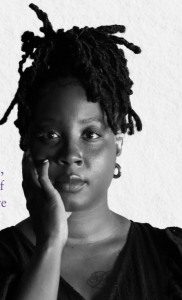
Hanging Loose Press: What are your proudest accomplishments in the past years?
Starr Davis: I guess my biggest accomplishment so far is really just getting this book published. This book, I was a Founders Prize recipient in, I believe, 2024. Oh, that was such a crazy moment in my life. I’ll never forget when they told me I’d won because I was standing in a freaking Arby’s line for my boss, grabbing her a sandwich. I was working for the University of Houston and it had been over a year since I saw my little girl. She was only three years old. And I was in this really horrible custody battle for her. And that’s pretty much how the book came about. The book was survival writing. It wasn’t like, hey, I got this awesome poetry manuscript. It was, yeah, I’m writing poems to stay alive, and they may so happen to be a manuscript if I put it together. And someone thought well enough of me to put it together and to send it off to the Founders Prize as a nomination. And I won, and I was just really taken aback from that because. I wasn’t that intentional about it being a book. I was just intentional about writing through my trauma and writing through something that was happening to me.
Also, the book was just now dropped this year. It went through a series of editorial events where I wasn’t sure it would be a book at all. I cried a lot. I had a lot of fear. The press had a lot of fear because I was still in litigation with my ex. So to be writing and to be in court is not fun because you have lawyers who are telling you don’t write a book, don’t post on social media, don’t do anything. And then you have a press who’s also afraid of legal action. And me, I was always afraid. I was thinking, okay, how do I navigate all this fear? How do I actually get this book to be a thing? It was really a choice. I think I just decided one day that I could do it. I’m just grateful for a really good team at Hanging Loose because I was so taken aback by being a winner and being brought into the fold, especially during such a really hard, traumatic time in my life. This wasn’t convenient at all. I don’t think the road to publication is a road of convenience, but it really wasn’t convenient for me to have been. Publishing a book in such a really sensitive time, not just for me but in the postpandemic world. This is when we’re trying to publish a book and still keep the arts alive. It was just a lot. So, yeah, my biggest accomplishment is just that book and my ability to push myself in really hard times and to still consider myself a poet and a creator, and to also still believe my words carry any type of weight. I really did hope that the book would help or touch someone. And I really prayed it wouldn’t just be my anger.
That was also a lot of the reasons why I was just so emotional about this book coming into the world because I didn’t want it to be like me handing my anger to everyone and just going, something really fucked up happened to me. I’m just trying to write about it and I’m processing it. Here you go.
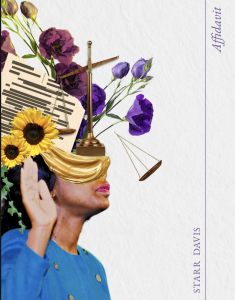
HLP: As a reader, Affidavit was a very cathartic experience. How does that book sort of inform your own processing of those hardships you were going through? How does writing in general help you work through those things and inform how you work through those things?
Starr Davis: Writing is just my way. Even just arriving at the title itself being Affidavit was—even though you think that’s not writing—writing. I mean, the original title was a little lengthier than it is now. It also didn’t have any legal inspiration behind it. My editor actually suggested the title, and I think that’s when I actually began to write because I think at that point the book had named itself. I was like, Oh, so this is actually what I’m dealing with, which did feel like a sense of identity, a sense of self, a sense of story. Fact versus testimony. How do all of these things exist together in a courtroom? It felt really complicated for me.
God, I wish you could see one of my notebooks. I write like a weird person, almost like field notes. Things are just everywhere sloppily. I think when people think of writers, they think we have these perfect, organized ways of ourselves. And no, like nothing about my life feels that organized. I have organized chaos. That’s the book. Organized my ramblings, my anger, my thoughts, but also structured enough to feel like a book
There was a point where I was having to write my own affidavit for court. And the lawyer came back to me and told me it was too long. A judge would never, a court would never take it and like to rewrite it completely. They only wanted facts only, like black and white. My name, where I was born, my child’s name, where she was born, the father’s name, where he was born, how we met being one sentence. Not this story, which to me was like, how can I condense that? When I did have to condense it or when the lawyer condensed it, it really sort of hurt because her wording exactly was they met from a one night stand. It was just like, damn. This is going to be put out there to the judge. I’m not married. I didn’t have a kid with someone I was married to, you know, but I’m in Texas. So, even if we’re not married, we are. We had a child together. We’re under a family law code that says you’re not married, but you’re married. You’re family. You had a kid. You’re going to stick it out together, whether he’s harmful or not, because he’s a father to that child. That’s when stuff got real for me as a writer. I realized I either have to write around this or I have to write through it. So I decided to write through. I decided to write through, and I think that’s how I got through it.
HLP: That’s really beautiful. Are there any poems in particular that you’re especially proud of that came out of this project?
Starr Davis: Yes, but they’re all the wild, ratchet ones. I have a series called “New Wine, New Wineskin” and I kind of felt like I could keep going with that. It doesn’t have much to do with the legal world, but it had everything to do with mine. That voice—I didn’t even recognize that girl. I was like, damn, oh, I’m zesty. Those pieces really surprised me, especially because I’ll never forget sitting at my computer while my kids were asleep. I’m just this new mother. And poetry wasn’t just spewing out of me. I wasn’t the Rihanna of poetics. I didn’t feel so inspired to write after having a child. I just kind of felt like existing in that moment. So I existed with my baby for as long as I could. Then these poems surfaced about being in my body, what my body feels like after having a baby. I had to actually look at myself. Looking at myself in the mirror was hard, seeing what my stomach and my breasts looked like. Also, dealing with the fact that people still kind of, you know, wanted me. I’m desirable out here in these streets. And I’m like, what’s going on? I’m feeding a kid milk. But you got people who actually like my post pregnancy snapback.
I was just all in an array of emotions and they sort of just started spewing out in these brave, all caps, block poems. It felt really Morgan Parker of me. I was really proud of myself because I really thought poetry is this narrow sort of narrative experience. I’ve always been a storyteller. When I started writing those, particularly that series, “The New Wine, New Wine Skin,” I realized I’m capable of being bold enough to say something and push myself out of my own poetic comfort zone.
Starr Davis: Yes, but they’re all the wild, ratchet ones. I have a series called “New Wine, New Wineskin” and I kind of felt like I could keep going with that. It doesn’t have much to do with the legal world, but it had everything to do with mine. That voice—I didn’t even recognize that girl. I was like, damn, oh, I’m zesty. Those pieces really surprised me, especially because I’ll never forget sitting at my computer while my kids were asleep. I’m just this new mother. And poetry wasn’t just spewing out of me. I wasn’t the Rihanna of poetics. I didn’t feel so inspired to write after having a child. I just kind of felt like existing in that moment. So I existed with my baby for as long as I could. Then these poems surfaced about being in my body, what my body feels like after having a baby. I had to actually look at myself. Looking at myself in the mirror was hard, seeing what my stomach and my breasts looked like. Also, dealing with the fact that people still kind of, you know, wanted me. I’m desirable out here in these streets. And I’m like, what’s going on? I’m feeding a kid milk. But you got people who actually like my post pregnancy snapback.
I was just all in an array of emotions and they sort of just started spewing out in these brave, all caps, block poems. It felt really Morgan Parker of me. I was really proud of myself because I really thought poetry is this narrow sort of narrative experience. I’ve always been a storyteller. When I started writing those, particularly that series, “The New Wine, New Wine Skin,” I realized I’m capable of being bold enough to say something and push myself out of my own poetic comfort zone.
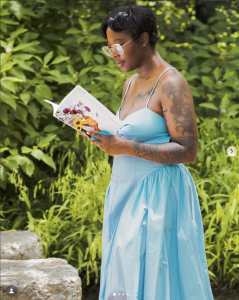
HLP: I really enjoyed the all caps one called “Honey for Sale.”
Starr Davis: Oh, yes, and Honey for Sale! That was the last poem I wrote for the collection, believe it or not. That got added in right at the last minute. I mean, this book was done. I can’t believe that made it in.
I had an awesome poetry instructor, David Graf from the City College of New York. He was my thesis advisor. He’s also an amazing poet, writer, and instructor. I asked him once, How do you know when a manuscript is finished? How do you know when a poem is finished? And he replied, You don’t. You have to unchain yourself from it. You have to decide it’s done. =
HLP: What are three books or poems by other authors that you’ve read in the last couple years that have made an impression on you?
Starr Davis: I tell people never ever ask me what I’m reading because I’m always reading something wicked that no one should read. I one day want to have a banned book, like an underground bookstore, like of my own, with like the world’s most banned and dangerous text that maybe nobody should really have their hands on. So I’m always reading something really crazy and radical, and I need to stop. But I’m going to not scare you today!
One book that made an impact was a Gregory Orr book called Poetry as Survival. This was like a Bible to me. Orr had a very tragic life and I think his trauma carried so much. I think weighted trauma only has poetry. It doesn’t have another place to land. I resonated with this level of writing through really, really hard trauma. It’s not a poetry book, it’s actually a poetry guide for writing in the midst of survival. So this was huge to me. He has a poetry book that I read adjacent to that, How Beautiful the Beloved.The poems are very small. I also love Lucille Clifton because I love anybody who is able to condense a poem. I really loved Lucille Clifton’s new book, How to Carry Water.
I also read a lot of The Long Devotion, which is a poetry anthology for mothers. It was edited by Emily Perez and Nancy Reddy, who happens to be a good friend of mine now, only because I emailed her so much. We’re besties now! So the book is art by mothers on motherhood. I especially love some of these poems by Jasmine Mendez. There were just so many powerful pieces in here. I really connected to women writing poems about postpartum, postpartum lullabies, a self portrait as God of a stillborn. I mean, these are the poetry titles I’m reading. This really kept me going. When I became a mom, I just went for the mom books. I kept thinking, there’s got to be poets who are moms too, right? We got to be writing about this, right? Moms are here and they’re writing some of the most powerful things on the planet. I’m just so glad to have stumbled, stumbled across these texts.
Oh, and I also wanted to throw one more out there! I have a really good friend named Sayuri Ayers. She writes a lot on motherhood.
HLP: What are any upcoming projects you have that you’re excited about?
Starr Davis: Next year, my memoir comes out. It’s called I Am Mostly Bad Blood with Autumn House Press. I’ve also written a chap book. My lifelong dream was to write a chap book. I always thought they were so cute but I thought I was like a wordy poet and I was never going to write a chap book. My page count is not even a chap book page count. But now I’ve written a chap book and I would love to see that out in the world. So, that’s definitely coming! I’m also writing another collection of poetry that I haven’t told anyone about. It’s my love letter to Texas because I am no longer there.
Also, I’m so grateful because I have won custody of my daughter. I’ve been able to close a door that I didn’t think would close. So I’m now free. That’s really awesome. I’m so free. I’m free creatively. I’m free geographically because for five years I was geographically restricted to the state of Texas. I was not allowed to leave because I had a child there. When I did attempt to leave with the child because of abuse, I was arrested. So I’ve had to learn some hard, cruel lessons about the South and how they operate. But in the space I’m in right now, I feel so safe to create. My projects now, I feel, are going to be operating under less urgency. I’m really looking forward to that. My next few projects, my chat book is actually not about any of this. It’s about rivers. It’s about water. It’s about being close to rivers, walking around rivers, and just being outside a lot to heal myself during some really hard times. I’m not outside pitching a tent looking under the stars. I’m just writing about times where I would need to take a walk and be close to nature to really sort of ground myself. I was never into meditating or any sort of spiritually grounding things before all of this. But a friend of mine taught me some grounding exercises when I had gotten arrested and when my life was at its craziest. She told me to go outside and to maybe go near a river or near water and to take my shoes off. I guess I’m remembering that feeling. How powerful that was to feel my feet on a really solid surface of the earth and to go this pain is not going to take me. I’m still standing. I’m just grateful that I get to write at these levels, and I’m even more so grateful that my next few projects are going to show that the pain didn’t defeat me.
My work is so important to me. Maybe because I realized I had it. After my daughter was taken from me, you got to go back into an empty house without your child, without their noises. And I was able to remember that I was still a poet. That really kept me alive. The work isn’t a child, but it’s like you can nurture it. You can nurture it and you can nurture yourself.
I’m so grateful that this collection is like out there and it’s making so much room for more.
Thanks to Ajuni Zubieta for assistance on this interview.

 From loose pages to issue 119 of our magazine, an anthology of over 100 HLP poets, over a decade of the Loose Award for translated works, the Founders prize for first book in its third year, and a bunch of great books in the works, we couldn’t have come this far without you.