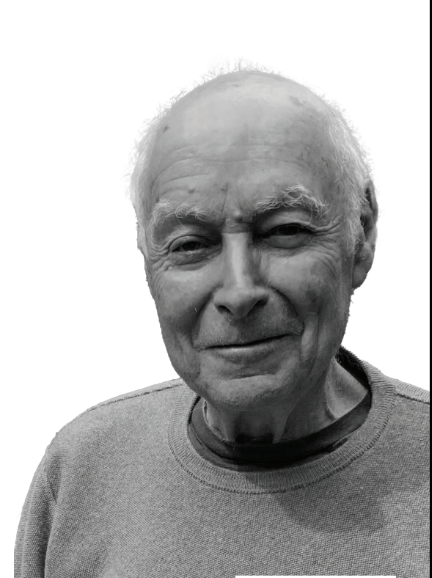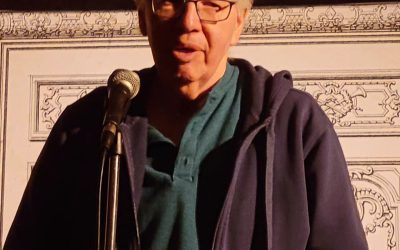

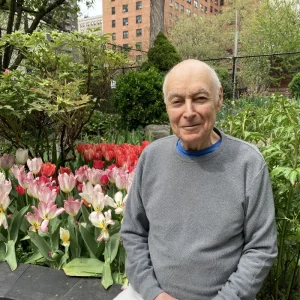
Steven Schrader is a lifelong New Yorker. Born in Washington Heights in 1935, he moved with his family to the Upper West Side at the age of fourteen, and never left. Over the years, he has been a public-school teacher, a city employee (the Welfare Department, the New York City Youth Board), a garment salesman, and the publisher of Cane Hill Press. For ten years he was the director of Teachers & Writers Collaborative. His five books of autobiographical stories include three from Hanging Loose Press: What We Deserved, Threads and Arriving at Work. His work has been included in several anthologies and broadcast on NPR’s Selected Shorts. He is married to the documentary filmmaker Lucy Kostelanetz.
Hanging Loose Press published Schrader’s newest collection of short stories, The Other Steve Schrader, which will be out this December.
Hanging Loose Press: What are this past year’s accomplishments that you are most proud of?
Steve Schrader: The past year has felt like a transitional one—going from being an old man to becoming a very old one (90 on my next birthday). I’ve been trying to figure out where that leaves me as a writer and as a human being. I’ve more or less finished a book of new and selected writing for HL (mostly selected) that Dick Lourie is going to take one last look at. In the past few years I’ve done very little writing and am trying to get going again. I do think there’s a lot to say about aging, which I don’t mean from a scientific point of view but from the perspective of understanding things more clearly or at least thinking that you do. Maybe my biggest accomplishment is that I feel I’ve kept my writing self alive and ready to begin again.
HLP: That is so important, what you’re saying about keeping your “writing self alive.” Certainly our aging is a human process we cannot escape (though people try!) and I think our writing life is so crucial to how we navigate it. Pardon this question in advance, but what kind of perspective of understanding have you figured out?
SS: I think I might have been a bit optimistic when I said I was keeping my writing self alive. Time seems to go by quicker and quicker as I approach 90. In the past when things went well, I felt my writing would rush out of me, almost as if I was simply the receptor of words passing through. My main job was to be at my notebook ready to take the words down. I almost never have had ideas away from my notebook, and I would always have to start with something mundane–a description of the weather or what I had for lunch. And then, if I was lucky, an inkling of an idea might appear and, if I was really lucky, words would come bursting out, seemingly on their own and I could write a piece in an hour or two. But then it might take days, weeks, months or even a year or two of waiting for this to happen again. And at my age I don’t have the time to wait, certainly not in months or years. And I wonder if I still have the physical strength to write like that. I think I still have a writer’s outlook—I like to recollect the past, notice details around me, and try to make meaning of it all. I feel I’m a more thoughtful and sympathetic person in old age than when I was younger and took things for granted. Now I experience an intensity about everyday things that wasn’t there before–this might be the last time I do something or see someone. I don’t think I have anything new to say about old age and I’m not trying to–I don’t think people read autobiographical writing like mine to learn facts about a subject. They read to learn how another person gets through life, struggles to get by and searches for meaning and understanding along the way. I’m still searching, which I take as hope that I’ll write some more.
HLP: Any particularly difficult experiences/challenges for you this year? and how did you work through them?
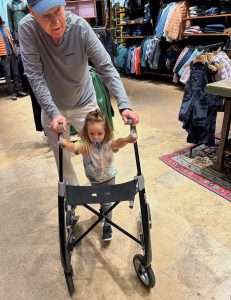
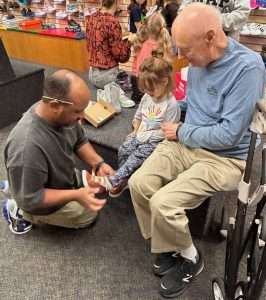
SS: I’ve had increasing trouble walking, which resulted in me using a cane a year ago and then a few months later a rollator walker to go outside with. Surprisingly, I found the rollator seemed to connect me with other people in a new way. Strangers rushed to open doors or would just smile as we waited at a red light and admire my rollator—it’s a Danish design and, I must say, is very sleek looking. I am able to get around much better than before and have been feeling a lot more optimistic and lively, which has led me to exercise more and feel stronger. Who knows, maybe eventually I won’t need one anymore.
HLP: When I started taking care of my mother and aunt because it was clear they needed extra support, the rollator was key in keeping them mobile! So I appreciate your insight on your interactions with your Danish designed version.
What are three books you’ve read recently that have made an impression on you?
SS: Frederick Douglass’s day to day description of his own and other slaves’ daily lives, with frequent beatings and whippings, along with the unrelenting cruelty of the slave owners in Narrative of the Life of Frederick Douglas is about as vivid and convincing of slavery’s horrors as I have ever read. It’s incredibly moving to witness how Douglas overcomes such terrible deprivation and somehow manages to learn to read (mostly self-taught) and to eventually become a leading abolitionist through his writing and lecturing.
A Rage in Harlem by Chester Himes is one of a series of detective novels featuring NYC police department detectives, Coffin Ed Johnson and Gravedigger Jones, though they don’t appear until almost the middle of this one. Almost all the characters are violent and seemingly without redemption, but somehow the writing is so sharp, the plot so entertaining, the characters so inventive that the reader (this one anyway) accepts their cruel, unfeeling behavior toward one another. Warning: a great deal of blood is splattered throughout the book.
Jean Rhys wrote Smile Please in her mid-80’s to give a truthful summing up of her life. (She died before she could give a final edit to the 2nd half.) It’s the kind of writing I’ve always enjoyed, personal, straight forward, clear, and honest. Smile Please consists of chapters in chronological order from her childhood in Dominica to her coming to London at 19 and working as a chorus girl. Rhys’s life was not easy—her own drinking, difficult men, poverty—but her resilience and ability to write about everything honestly somehow gives meaning to her suffering and makes it all worthwhile.
HLP: Any upcoming projects?
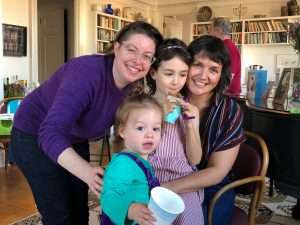
SS: I hope to get back to writing regularly. When I sit down to write I never know specifically what I’m going to write about, so it’s a bit of a leap of faith to hope that I will keep on coming up with something new. I am always looking to learn something about myself or the world, though I’ve never been much of a traveler—I was born in Washington Heights and then moved at 13 to the Upper West Side, around 5 or 6 miles away. Now I live in an even more diminished world—I don’t seem to go beyond 96th Street to 110th Street around Broadway, with exceptions for doctor’s appointments and trips to Brooklyn to visit my daughter Eliza and her wife Natasha and their children Lilli James (LJ) 8 and Levi, 2 and a half. I used to write letters to LJ when she was younger—one of them is in the upcoming HL book–and now that she’s older I hope to exchange letters with her. She’s a real good reader and, I suspect, will turn out to be an interesting writer. I feel we might have a lot to say to each other.